Available homes
Discover the homes currently available across Landcom communities and find the right opportunity to buy with Landcom.

Discover the homes currently available across Landcom communities and find the right opportunity to buy with Landcom.


Discover how Landcom engages with residents, councils and stakeholders to create affordable, sustainable and inclusive communities.
Find out more
Stay up to date with Landcom’s latest industry opportunities, including current tenders, upcoming projects, and ways to work with us.
Find out more Flood-impacted homeowners first in line for new East Lismore lots
 220 new homes for Sydney’s essential workers underway in Annandale
 Major milestone reached for Lismore Build-to- Rent homes
 Growing food and density together
 Creating a Spark: Energy Sharing Communities
 Valuing Creative Placemaking Toolkit
'In the Making' will showcase the projects, places and positive impacts we’re delivering across NSW. Explore the first quarterly edition and stay connected as this work evolves.

Explore Landcom’s teams and discover the diverse careers we offer. See how our people work together to create sustainable, inclusive communities.

Discover Landcom’s culture, values and behaviours, and see what makes our workplace inclusive, collaborative and focused on creating real impact.

Landcom is the NSW Government’s land and property developer. We work with government to unlock land...

Flood-impacted homeowners first in line for new East Lismore lots
220 new homes for Sydney’s essential workers underway in Annandale
Major milestone reached for Lismore Build-to- Rent homes

Northern Rivers
Nature on your doorstep and a stone’s throw from everyday essentials - a new sustainable, resilient neighbourhood is coming to East Lismore. In partnership with the NSW Reconstruction Authority, Landcom is planning a future-focused new community in East Lismore to support recovery after the 2022 floods.
Together, we’re unlocking new real estate to meet the need for more resilient, well-located and long-term housing in the Lismore region. The project is designed to meet local priorities not just now, but into the future, delivering at least 500 homes away from flood-prone and vegetated areas. Leafy streets and native landscaping will complement the natural beauty of the setting, while surrounding bushland will be retained to protect habitat for local wildlife.
Close to open space, schools, shops, community facilities and Southern Cross University, our East Lismore community will offer future residents an inclusive and well-connected place to call home, with a mix of land sizes and housing types providing more choice and affordability for a wider range of households.
Land will also be set aside for relocating suitable buyback homes from flood-affected areas and at least 20% of homes will be affordable housing for very low to moderate-income households.
In the site's northwest corner we're also delivering an additional 50 build-to-rent apartments, funded through the NSW Government’s build-to-rent program, to provide secure homes for long-term renters.
Our East Lismore project reflects Landcom’s commitment to designing for the long-term - going beyond immediate response to make more safe, resilient communities happen that support people, place and prosperity for generations to come.
Crawford Road, East Lismore
Nature on your doorstep and a stone’s throw from everyday essentials - a new sustainable, resilient neighbourhood is coming to East Lismore. In partnership with the NSW Reconstruction Authority, Landcom is planning a future-focused new community in East Lismore to support recovery after the 2022 floods.
Together, we’re unlocking new real estate to meet the need for more resilient, well-located and long-term housing in the Lismore region. The project is designed to meet local priorities not just now, but into the future, delivering at least 500 homes away from flood-prone and vegetated areas. Leafy streets and native landscaping will complement the natural beauty of the setting, while surrounding bushland will be retained to protect habitat for local wildlife.
Close to open space, schools, shops, community facilities and Southern Cross University, our East Lismore community will offer future residents an inclusive and well-connected place to call home, with a mix of land sizes and housing types providing more choice and affordability for a wider range of households.
Land will also be set aside for relocating suitable buyback homes from flood-affected areas and at least 20% of homes will be affordable housing for very low to moderate-income households.
In the site's northwest corner we're also delivering an additional 50 build-to-rent apartments, funded through the NSW Government’s build-to-rent program, to provide secure homes for long-term renters.
Our East Lismore project reflects Landcom’s commitment to designing for the long-term - going beyond immediate response to make more safe, resilient communities happen that support people, place and prosperity for generations to come.
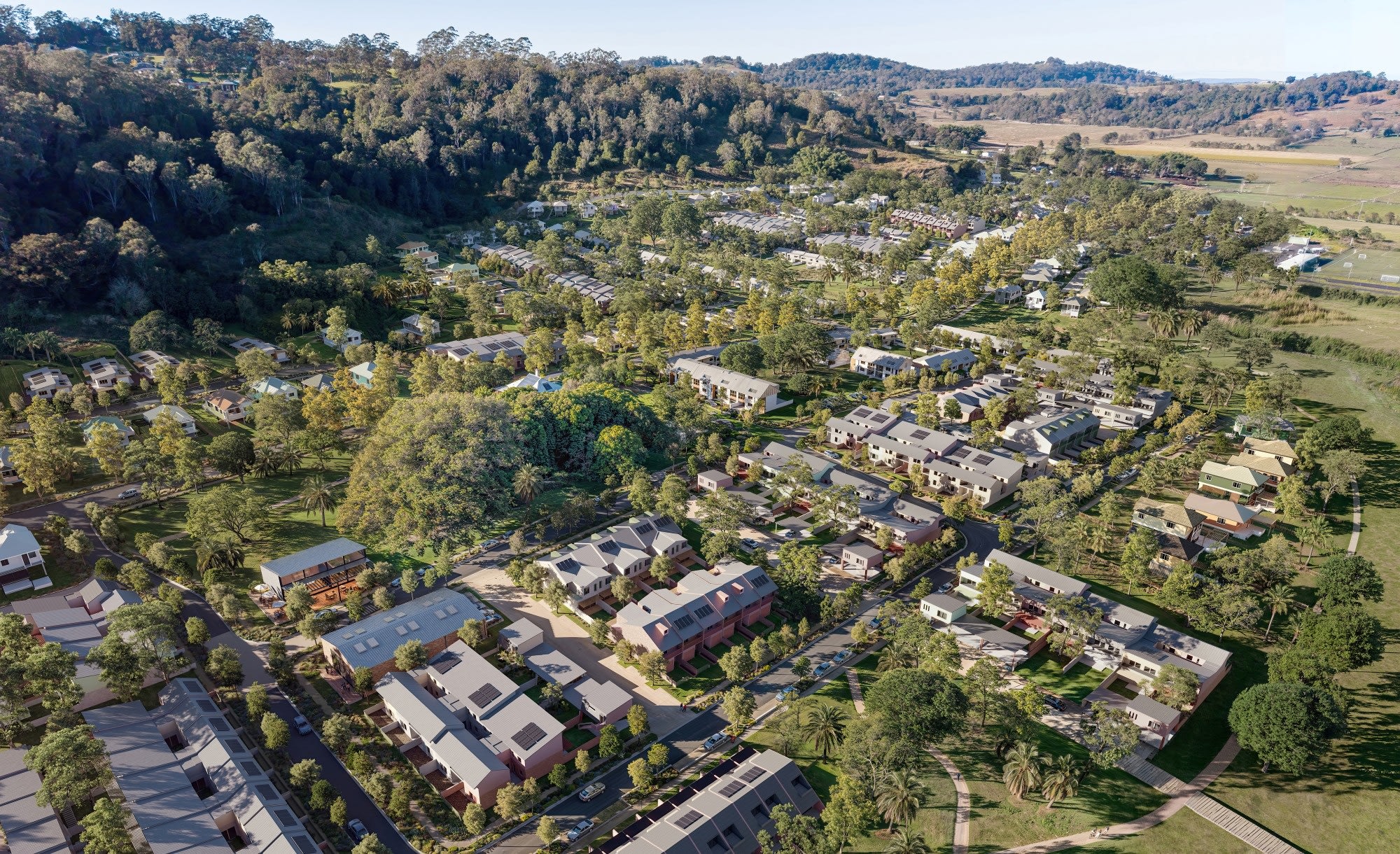



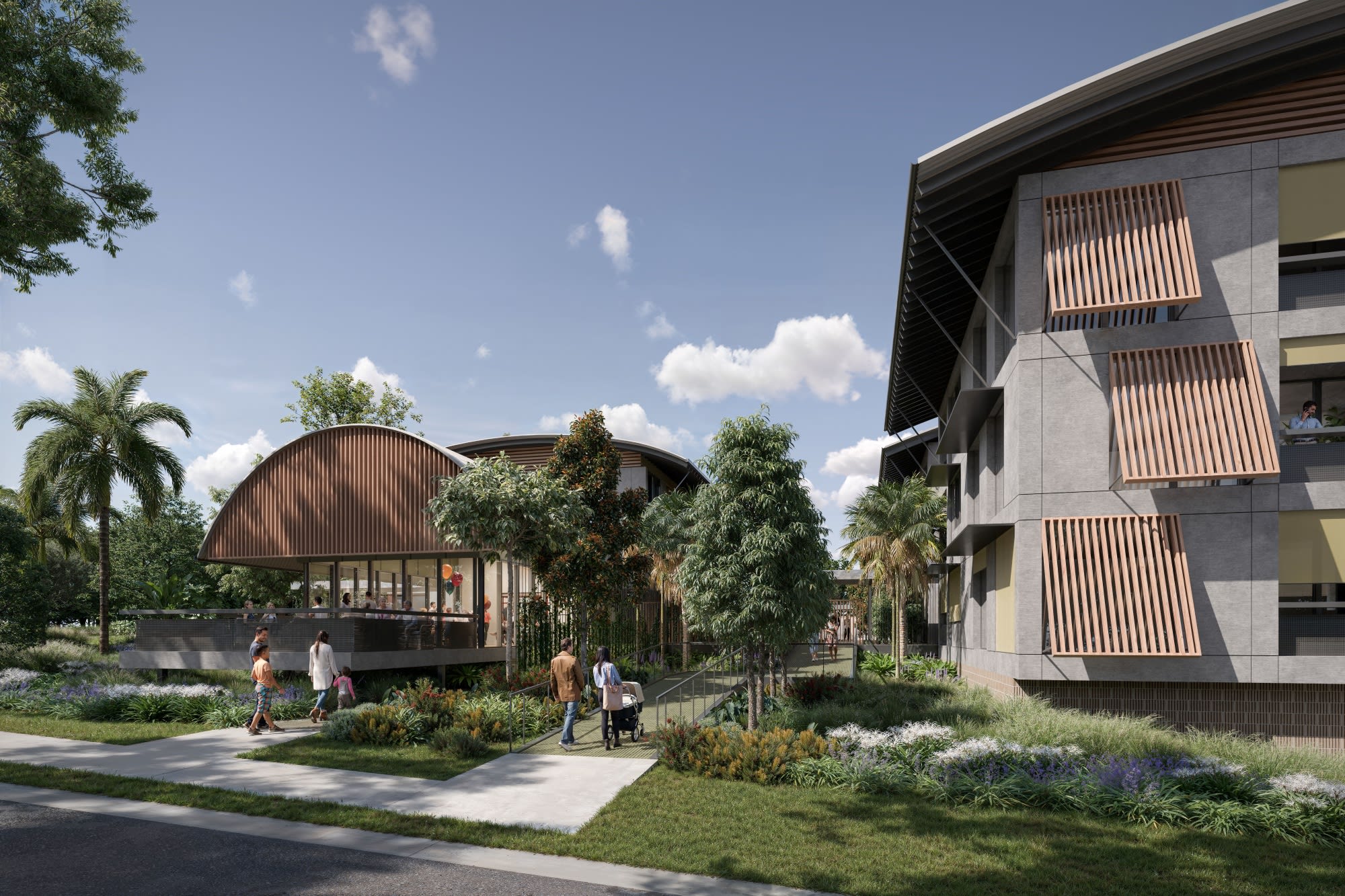

Artist's impression of the development from above (looking southeast), subject to change and approvals
Artist's impression of the development from above (looking northeast), subject to change and approvals
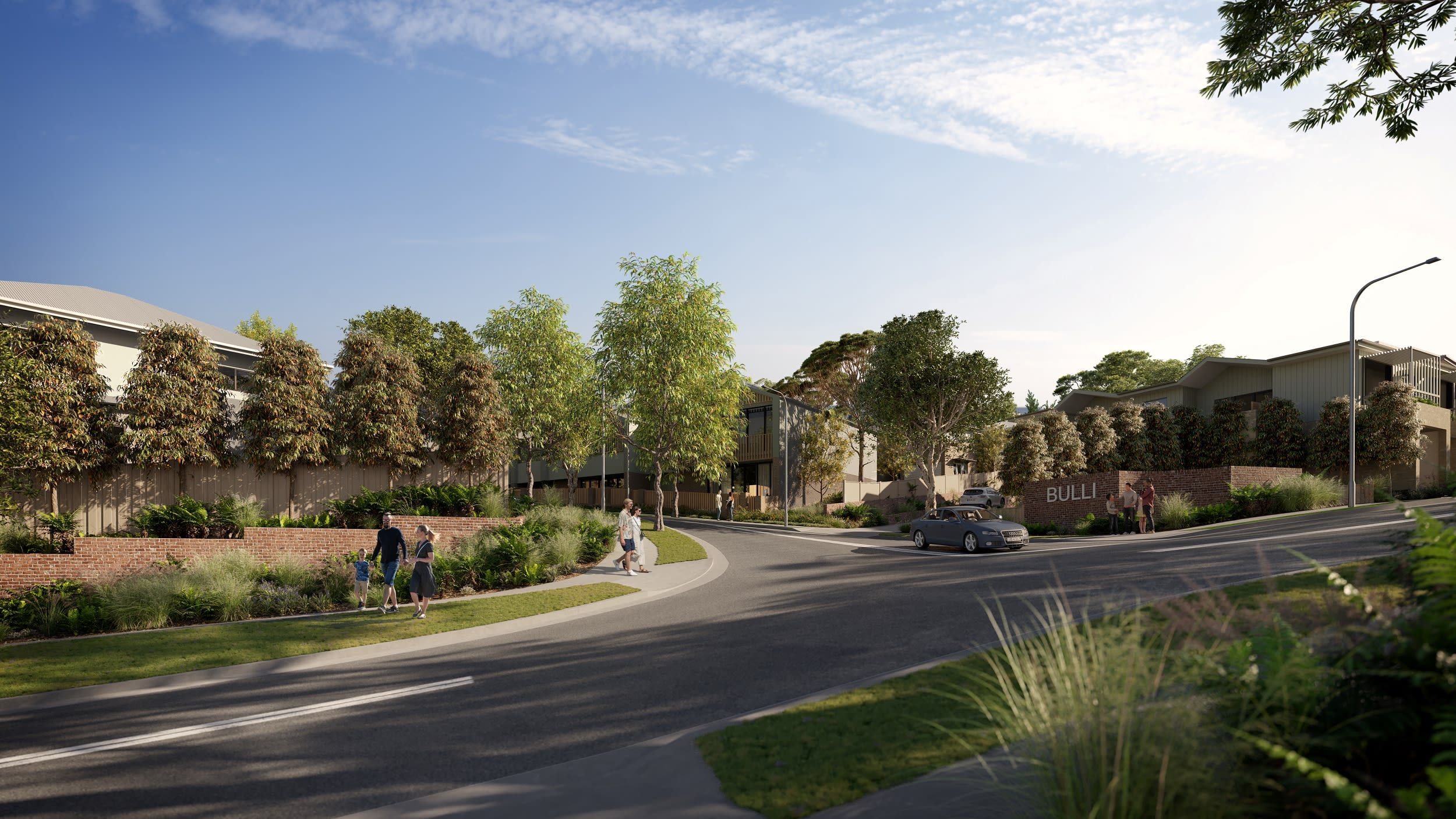
Artist’s impression of Stage 1 relocated buyback homes, subject to change and approvals
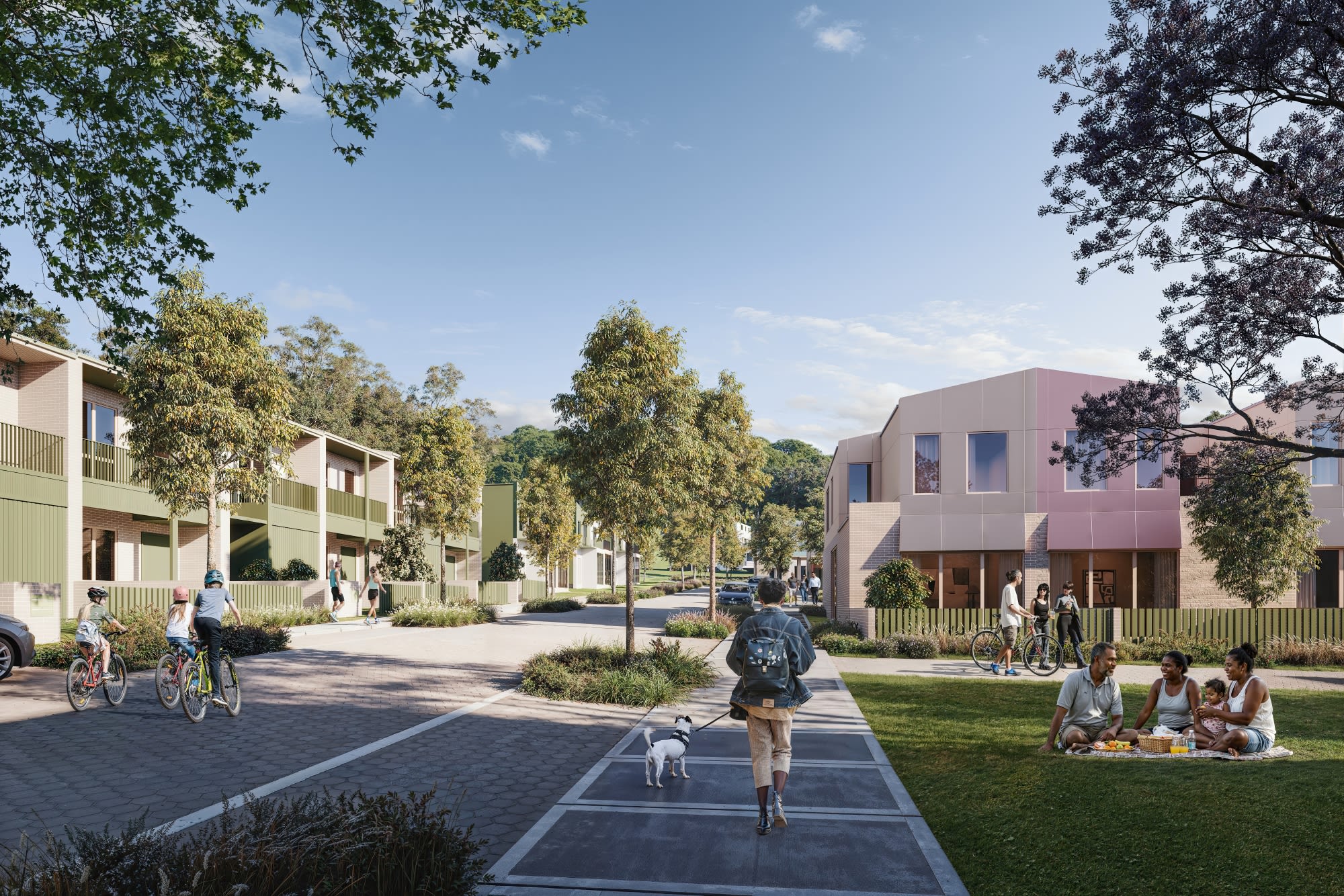
Artist's impression of Stage 1 terraces, subject to change and approvals
Artist’s impression of Stage 1, subject to change and approvals
Artist’s impression of Stage 1 development looking west, subject to change and approvals
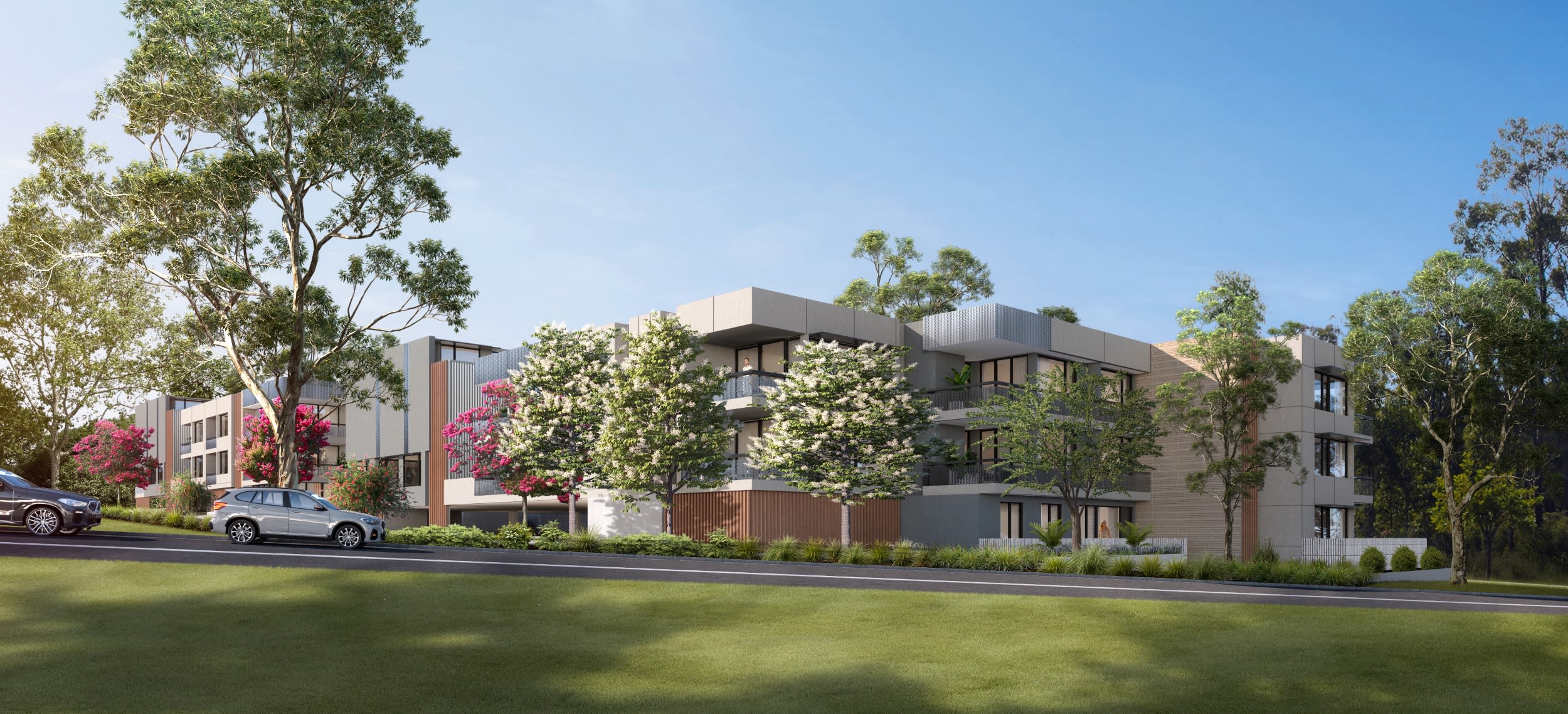
Artist’s impression of future build to rent apartments from Military Road, subject to change and approvals
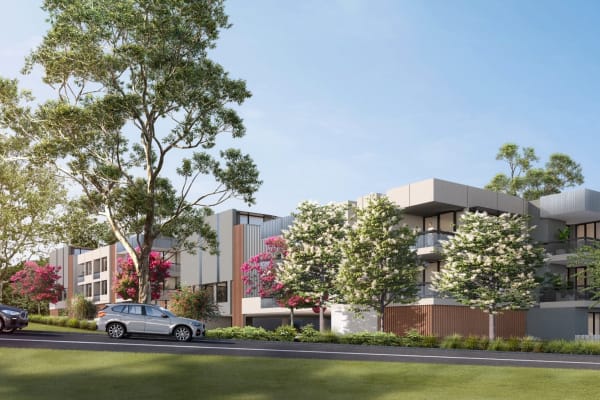
Artist’s impression of future build to rent apartments from Crawford Road, subject to change and approvals
Learn about opportunities to share feedback and help shape the future of the development.

What are the plans for the site?
Landcom, together with the NSW Reconstruction Authority, is planning a sustainable and resilient new neighbourhood on a 74-hectare site at Crawford Road, East Lismore.
We're planning for:
Where will homes be on site?
Homes will be built in the central part of the site, keeping green areas to support local habitat. All homes will be set back from flood prone and vegetated areas to reduce bushfire risk.
What kind of homes are proposed?
To provide greater housing choice for locals, we are planning for a mix of housing types, 20% affordable housing for very low to moderate-income households, and land for relocating suitable buyback homes from flood-affected areas.
Stage 1 covers a 5-hectare area at the northern end of the Crawford Road site, with room for about 100 homes by prioritising smaller more affordable housing types to better meet local needs and offer greater housing choice. Plans for Stage 1 include:
The draft masterplan for the broader 74-hectare site has identified potential for 500-700 homes. These include a mix of terraces, duplexes, freestanding homes and relocated buyback homes.
Why are a mix of housing types proposed?
A mix of housing types and sizes provides a greater choice of homes to suit the diversity of our communities and different household sizes, lifestyles, needs and budgets.
Greater housing diversity in a neighbourhood also benefits people as their housing needs change (such as moving out of the family home or getting older), with more opportunities to stay local to a place – and the people – they love.
In the Lismore area, the most common housing type is a single freestanding house (77%) and most dwellings have three or more bedrooms (73%).
We are optimising the East Lismore site's developable area to provide greater housing choice and options that better match local household sizes. This includes smaller, more affordable homes with fewer bedrooms, as well as land suitable for relocating buyback homes from flood-affected areas.
What is affordable housing and how is this being incorporated?
Affordable housing is for very low to moderate-income households, helping them to meet other essential living costs such as food, clothing, transport, medical care and education.
At the East Lismore site, at least 20% of homes/lots will be affordable housing in the form of:
What is the project timeline?
To help deliver homes sooner, the project is being delivered in stages.
Resilient Homes Program participants who've accepted a buyback offer will be given the first opportunity to purchase new land and homes in all stages, before they're offered to the open market. Sales information, including pricing, home/lot sizes and the sales process will be available closer to the sales release.
Stage 1
Stage 1 covers a 5-hectare area at the northern end of the site and is expected to deliver around 100 homes. Stage 1 includes:
In May 2026 Landcom submitted a development application for Stage 1 to Lismore City Council, seeking approval for the layout and location of lots, new streets and footpaths, landscaping and water, sewer and electricity connections. The application was approved by the Northern Regional Planning Panel in September 2026.
Key timings (subject to approvals and weather):
Future stages
We invited community and stakeholder feedback on the draft masterplan for the broader 74-hectare site from 20 July to 16 August 2026. Informed by feedback and technical studies, we aim to finalise the masterplan in early 2027 to guide future development stages, which will be delivered progressively through to about 2030.
When will construction begin and what's involved?
Early works and site maintenance
There is ongoing weed management onsite. In early 2026 we started removing invasive plant species like camphor laurel, privets and bamboo, helping to protect areas of sensitive ecology along the site’s northern, eastern and western boundaries and improve site access to support our planning.
Construction
Subject to approvals and weather conditions, Stage 1 works are expected to start in early 2027.
Works for Stage 1 will involve:
We'll work with our contractors to minimise construction impacts and will keep neighbours informed of progress. The detailed construction approach will be determined when planning if finalised.
The final development phase is anticipated to finish in about 2030.
What will happen to the temporary housing village on site?
The temporary housing village is located towards the southern end of the East Lismore site. It is operated under a leasing agreement with Homes NSW which was extended until December 2026.
The NSW Reconstruction Authority is working with Landcom to explore how the village:
When will sales begin for Resilient Homes Program buyback participants?
Following development approval in September, Landcom is preparing to release the first 19 vacant residential lots for sale to prioritised Resilient Homes Program buyback participants before the end of 2026. These lots will provide opportunities to:
Stage 1 also includes plans for between 70-80 terraces, with a mix of 1, 2, 3 and 4 bedrooms. Terrace sales will start around mid-2027, subject to planning approvals and construction progress.
Sales information, including pricing, home/lot sizes and the sales process will be available closer to the sales release.
When will sales begin for the general public?
Resilient Homes Program buyback participants get the first opportunity to purchase land and/or terraces as part of Stage 1. Any lots remaining after the priority sales process can then be offered to the broader market.
The timing of releases to the general public is yet to be determined, but is likely to be during 2027.
What will homes or land cost?
Prices will vary depending on the land size and/or housing type, and are subject to changing market conditions. We're planning for a mix of land sizes and housing types to provide greater housing choice and affordability.
Sales information, including pricing, home/lot sizes and the sales process will be available closer to each sales release.
How can I provide feedback about the project?
We’re consulting neighbours, the wider community, Lismore City Council and other stakeholders during the planning process. Local knowledge, ideas and feedback will help us to create a place that reflects the needs and aspirations of the community, now and into the future.
We’ll carefully consider feedback alongside planning controls, best practice urban design, site constraints, housing and sustainability targets, and project feasibility, to finalise our plans.
Visit our Join In page for past and current consultation opportunities.
Stage 1
We invited feedback on our initial plans in early 2026 and submitted the Stage 1 development application to Lismore City Council in May 2026. Council exhibited the application from 11 May to 8 June 2026, inviting community feedback to inform their assessment.
The application (114/2026 – 34 Crawford Road East Lismore) was approved by the Northern Regional Planning Panel in September 2026.
Future stages
We invited feedback on our draft masterplan for the broader 74-hectare site from 20 July to 16 August 2026. This is a long-term plan that shows how the site could be developed over time, including the proposed housing mix, green spaces, sustainability initiatives and future neighbourhood character.
We aim to finalise the site masterplan in early 2027.
How will you consider the surrounding neighbourhood?
We're working with technical specialists to understand site opportunities and constraints to support well-designed, sustainable development.
Technical studies will cover:
We're also consulting neighbours, the wider community, Lismore City Council and other stakeholders during the planning process. This includes seeking input into the overall site masterplan.
How will you consider local traffic and parking?
We're planning leafy, green streets that prioritise walking and cycling to support active, healthy lifestyles and provide easy connections to nearby destinations.
Stage 1 is expected to have minimal impact on local roads and infrastructure, with only one additional vehicle per minute during park hour.
We've set aside funds for potential infrastructure upgrades, including local roads and utilities, if determined necessary to support future stages following further technical studies. Early assessments have identified potential upgrades to the Dalley Street-Military Road intersection, the Military Road-Crawford Road-Walker Street intersection and to Military Road between the two intersections.
The number of private parking spaces will align with Council requirements for new housing and firm up as planning progresses.
Will homes have private parking?
Homes in Stage 1 are planned to have different parking configurations that provide space either on the lot (garage or driveway, or rear garage from a laneway) or space reserved in a nearby parking lot, in addition to on-street parking.
Fewer parking spaces on the lot helps to optimise land use for more homes, reduce home construction and purchase costs, increase outdoor space for yards and landscaping, and provide more flexibility for designing the home’s exterior and landscaping.
How will you consider impacts on plants and animals like koalas?
The project goal is to deliver a sustainable and resilient development, balancing the urgent need for new housing while minimising environmental impacts and supporting biodiversity.
Less than half of the 74-hectare site will be developed, with homes built away from flood prone land and sensitive ecological areas like the koala habitat along the site's northern and eastern boundaries.
As many healthy native trees and koala feeder trees will be retained within the developable area as possible, while native vegetation will be planted across the site and koala feeder trees in suitable areas. New streets will be tree-lined to provide shade and cool the air, with low speed limits and traffic calming measures to help protect any wandering wildlife.
Planning and design work includes a range of environmental assessments, and Landcom will continue to consult Lismore City Council and other stakeholders like Friends of the Koala.
Will houses on the site be impacted by flooding?
The bulk of the site is outside of the Wilson River floodplain. Development will be focused through the site's central corridor, with homes built above the Lismore Local Government Area’s flood planning level.
A flood engineer will complete a detailed assessment of the site to help minimise risks of flooding and determine approaches to best manage and treat stormwater.
The project is focused on supporting long-term resilience and reducing exposure to natural hazards.
How will the risk of bushfire be managed?
Development will be focused through the central corridor of the site that is mainly open grass paddock.
A range of design measures will help minimise the risk of bushfire to future homes. This would include ensuring there is an adequate buffer between development and heavily vegetated areas and key road widths that support fire trucks and emergency vehicles. Bushfire risk mitigation measures will be further investigated as planning progresses.
How will you consider the site's history and any heritage features?
While the site is not heritage listed, a detailed heritage assessment will be completed in line with planning requirements.
Planning will consider opportunities to integrate the former Maizegrove Cottage into the development, while the site’s broader history and former uses may be reflected or interpreted in landscape design.
Protocols will be in place to manage any historic or Aboriginal heritage items that may be uncovered during construction.
How will you consider First Nations heritage and design?
The site is on the land of the Widjabul Wia-bal people of the Bundjalung Nation.
We’re seeking to design, deliver and care for this neighbourhood in a way that treads lightly, gives back to Country, and honours the cultural, ecological and spiritual connections that define this place.
To do this we’re working closely with Widjabul Wia-bal and other Aboriginal community in the region to develop Country-centred principles that will guide the project. Our approach aligns with the NSW Government Architect’s Connecting with Country Framework.
Protocols will be in place to manage any historic or Aboriginal heritage items that may be uncovered during construction.
How will you consider design excellence and sustainability?
We aim to showcase design excellence, creating a great place that's fit for the future – somewhere that's sustainable, resilient and inclusive.
Key design and sustainability considerations include:
Demonstrating our commitment, we're targeting a 5 star Green Star communities rating through the Green Building Council of Australia. This accreditation recognises developments which strive to create a healthier, more liveable and future-ready neighbourhood.
What is build-to-rent and why is it being delivered here?
In the midst of the current housing crisis, the NSW Government is financing Landcom to deliver build-to-rent projects in the Northern Rivers and on the South Coast, where communities are feeling the stresses of rising rents and limited housing availability.
Build-to-rent is purpose-built housing designed for rent, rather than sale. It can offer longer-term leases that provide greater rental security than the 12-month “leasing cycle”, with annual rental increases often locked in upfront so that tenants have greater financial security.
In East Lismore, we will deliver 50 build-to-rent apartments in mid-rise buildings, with a mix of apartment sizes to suit different renters.
20% of the apartments will be affordable rental housing for very low to moderate-income households. Rent is discounted so that residents can meet other basic living costs, such as food, clothing, transport, medical care and education.
The NSW Government will retain ownership of the build-to-rent properties. By the end of 2026 we aim to appoint a suitable operator to manage the properties and tenancies and will share further information for interested renters.
Who will manage the build-to-rent apartments and how can people apply for a rental?
The NSW Government will retain ownership of the build-to-rent properties.
By the end of 2026 we aim to appoint a suitable operator, such as a community housing provider.
Once appointed, the building operator will be responsible for managing the building and all tenancies, including applications from prospective tenants. Further information about how to register interest and apply for a rental property will be available in the coming months.
Major construction works are set to finish by late 2026 and the finishing touches completed in early 2027, with the first tenants moving in soon after.
When will construction finish and what's involved?
Construction began in November 2025. Major works are set to finish by late 2026 and the finishing touches completed in early 2027, with the first tenants moving in soon after.
Construction hours are 7am to 5pm, Monday to Saturday, in line with Council requirements. If the hours need to change to complete a long task such as a concrete pour it will be approved by Council and we’ll notify neighbours beforehand.
Works include:
Construction can be noisy and dusty at times. Construction impacts are being managed with measures that meet Council’s requirements for dust, noise, working hours and impacts on the local community.
Whatever you need, we’re here to help.
info@landcom.nsw.gov.au
(02) 9841 8600
If you require the services of an interpreter, please contact the Translating and Interpreting Service on 131 450 and ask them to call Landcom on 02 9841 8600. The interpreter will then assist you with the translation.