Available homes
Discover the homes currently available across Landcom communities and find the right opportunity to buy with Landcom.

Discover the homes currently available across Landcom communities and find the right opportunity to buy with Landcom.

Discover how Landcom engages with residents, councils and stakeholders to create affordable, sustainable and inclusive communities.
Find out more
Stay up to date with Landcom’s latest industry opportunities, including current tenders, upcoming projects, and ways to work with us.
Find out more Flood-impacted homeowners first in line for new East Lismore lots
 220 new homes for Sydney’s essential workers underway in Annandale
 Major milestone reached for Lismore Build-to- Rent homes
 Growing food and density together
 Creating a Spark: Energy Sharing Communities
 Valuing Creative Placemaking Toolkit
'In the Making' will showcase the projects, places and positive impacts we’re delivering across NSW. Explore the first quarterly edition and stay connected as this work evolves.

Explore Landcom’s teams and discover the diverse careers we offer. See how our people work together to create sustainable, inclusive communities.

Discover Landcom’s culture, values and behaviours, and see what makes our workplace inclusive, collaborative and focused on creating real impact.

Landcom is the NSW Government’s land and property developer. We work with government to unlock land...

Flood-impacted homeowners first in line for new East Lismore lots
220 new homes for Sydney’s essential workers underway in Annandale
Major milestone reached for Lismore Build-to- Rent homes

A defining period for Landcom as the deepening housing crisis sparks renewal as an integrated land and property developer.
Landcom is embracing innovations, trialling state of the art planning and construction methods to fast track diverse housing.
Our project pipeline builds on our legacy, unlocking more vibrant communities in our metropolitan areas and expanding our footprint in the regions to create thriving new neighbourhoods.
Landcom is ramping up operations to create more affordable and sustainable communities with housing affordability as our focus.
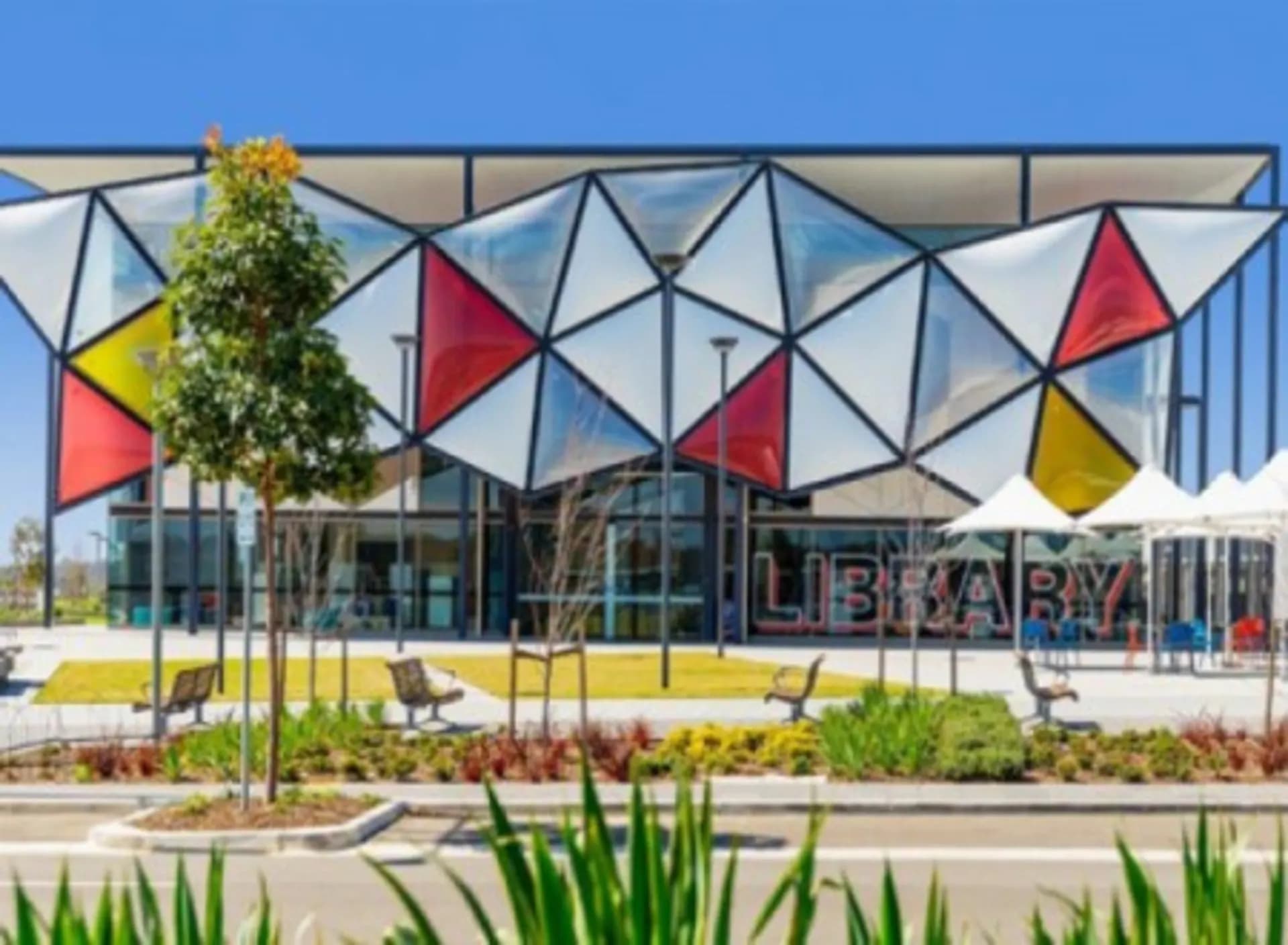
The NSW Government reassigned UrbanGrowth NSW's portfolio into three separate organisations. Landcom was refocused to take an active role in supporting the NSW Government's housing agenda including increasing housing affordability, supply and diversity.
While rebuilding the organisation's project pipeline, Landcom focused on demonstrating new affordable housing models and creating more affordable and sustainable communities in partnership with councils, industry, Community Housing Providers and landowners.

In 2013, Landcom started trading as UrbanGrowth NSW. The new name signified a change in direction and a new government mandate for the organisation. Activities widened from housing supply of predominantly greenfield development to a new focus on delivering a portfolio of seven major urban renewal and infill programs.
In 2015, the organisation was challenged to supply the equivalent of 20,000 new homes sites over the following four years to meet the needs of Sydney’s growing population. We achieved this target in 2019.

Due to the financial uncertainty, Landcom developed new ways to partner and remain a catalyst for investment. This included rapidly responding to and supporting the state government in delivering on housing targets in the Commonwealth Stimulus Package. Landcom worked closely with the Department of Housing on social housing and infrastructure in the first tranche of the Nation Building stimulus package to deliver 1,100 new homes in two years.
Landcom started to focus on a number of complex and strategic urban renewal projects including transit orientated development opportunities to leverage the government’s investment in transport infrastructure as well as increasing production to counter the ongoing market downturn and addressing affordability by creating more housing diversity.

On 1 January 2002, Landcom became a State Owned Corporation under the Landcom Corporation Act 2001. Landcom had a new stated aim: to become a leader in urban design, environmental sustainability, and in creating better communities and to unlock the delivery of strategic and complex sites. During the 2000s an important focus of the organisation was setting the highest standards in sustainability principles across its portfolio of projects.
There was also a renewed focus on partnerships with both the private sector and government. Corporatisation enabled the organisation to respond to market conditions more flexibly and achieve faster decision making as well as making development more efficient, without compromising any of the standards or probity expected of a public agency.

Landcom began an important shift, by expanding operations from greenfields development into urban renewal and redevelopment projects in the inner and middle-ring suburbs of the Sydney metropolitan area to assist the government in its urban consolidation policy.
While we explored sustainable approaches to increasing densities in our greenfield projects, Landcom began developing expertise in working with multiple landowners, including government agencies, to unlock sites suitable for urban renewal within existing areas.
In partnership with private developers, Landcom’s urban renewal projects demonstrated new urban design, sustainability and delivery approaches and delivered many multi-award winning projects.
During this time the organisation also undertook a management review and appointed an eight-member external Board.

By the mid 1980s Landcom had become an active supporter and driver of urban consolidation, creating a Special Projects Unit in 1985 to promote medium density development with smaller lots and innovative design.
Landcom expanded its operations to land and house packages and joint promotion schemes with builders as well as new partnerships with major landowners and developers to increase land supply. It expanded its advocacy into coordinated infrastructure funding, subdivision standards as well as planning and land consolidation efficiencies.
During the early 1990s the organisation also developed a focus on sustainability, providing community facilities and supporting new communities. Landcom also started demonstrating urban infill and medium density approaches in greenfields development to address urban sprawl.
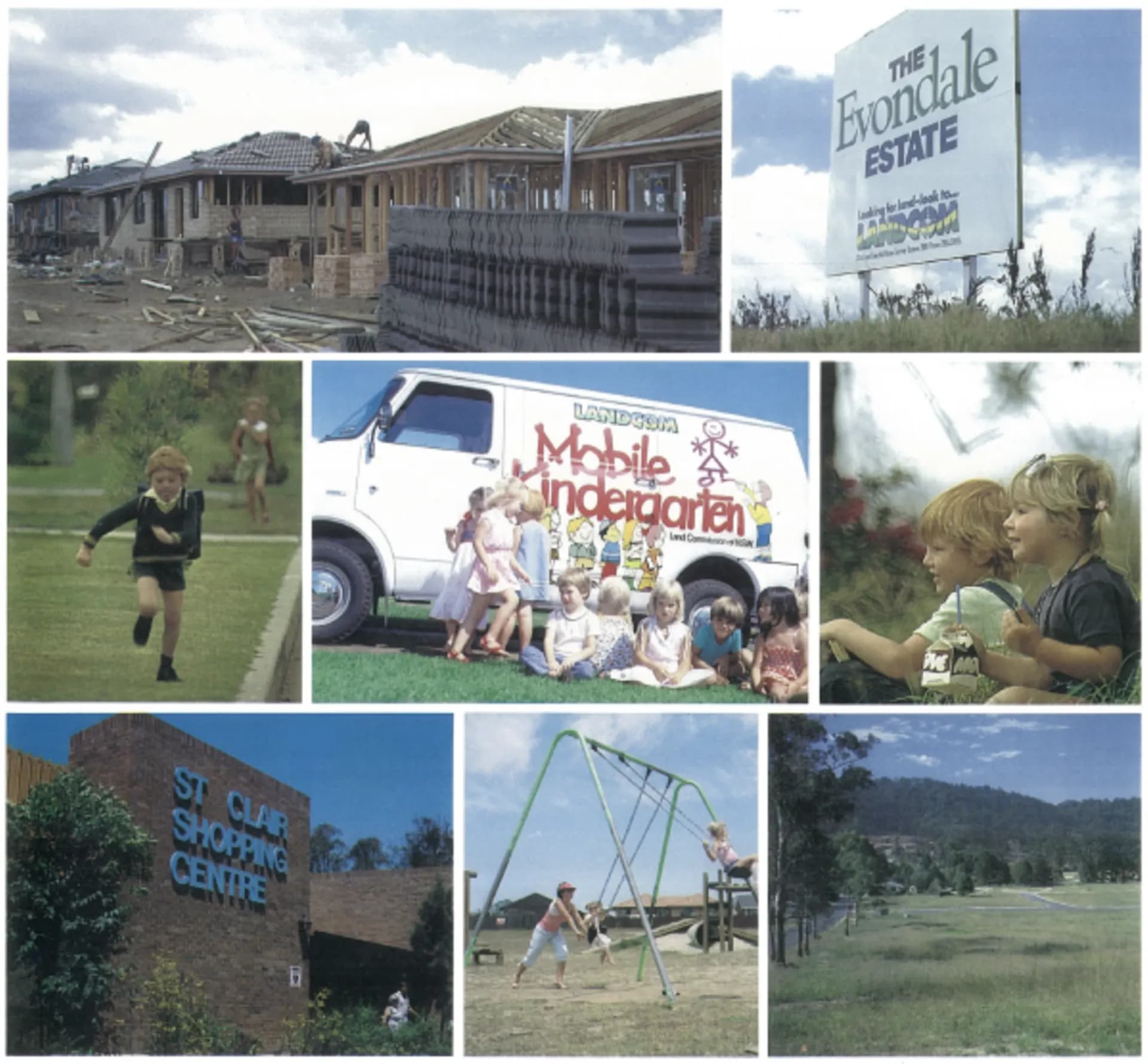
Landcom acquired land at St Mary’s, Campbelltown, Penrith and in the Illawarra, and released its first land for sale on 23 April 1977 at St Clair Estate.
With the economy depressed and finance limited, in the mid 1970s Landcom worked with builders to create land and house package deals for prospective buyers.
Landcom was also actively seeking to develop relationships with the private development industry and with industry bodies.
Landcom was active in advocating for rezoning and approval efficiencies within government to help stabilise the housing market and support industry.

The Land Commission of NSW was established by the NSW Government in November 1976 in response to the shortages of residential land and the accompanying rapid price rises which occurred in Sydney, as in the other major cities in Australia in the late 1960s and early 1970s.
The Land Commission of NSW, which would later become Landcom, commenced operations on 8 November 1976.
The organisation’s main purpose was to acquire land for present and future urban development and other public uses to help moderate the housing market, stabilise land supply and support the development industry with homesite sales to be made at the ‘lowest practicable price’.